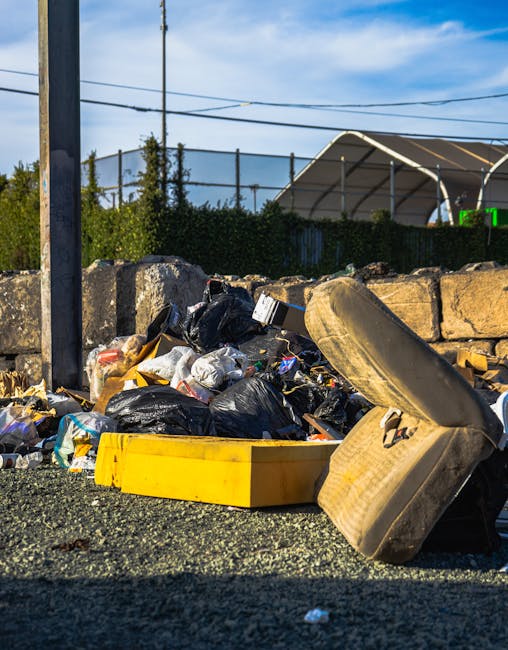
SE26 Bulky Rubbish Removal Tips for Sydenham Flats
If you live in a flat in SE26, you already know bulky rubbish removal can be a bit of a juggling act. Stairs are narrow, hallways are shared, lifts are slow when you need them most, and that old sofa somehow feels heavier every time you move it. This guide pulls together practical SE26 bulky rubbish removal tips for Sydenham flats so you can clear large items without creating drama for neighbours, landlords, or your back.
Whether you're dealing with a worn-out mattress, a fridge that finally gave up, or a pile of clearance waste from a flat refurb, the right plan saves time, stress, and avoidable costs. Below, you'll find straightforward advice on how bulky waste removal works, what to watch out for in flats, and how to choose the cleanest, safest option for your building.
Why SE26 bulky rubbish removal tips for Sydenham flats Matters
Bulky waste in flats creates a different set of problems from a house. In a terraced street or a converted building, the item itself is only half the issue. The rest is access: shared entrances, timed parking, tight turns on stairwells, and neighbours who quite reasonably do not want a mattress leaning in the communal hallway all afternoon.
That is why good planning matters. A tidy, controlled removal reduces the chance of blocked exits, damaged walls, complaints from neighbours, or missed collections. It also helps you decide whether a one-off rubbish removal service, a man and van collection, or a skip-based solution is the better fit.
For many Sydenham flats, the goal is not just getting rid of stuff. It is getting rid of it cleanly, quietly, and without disrupting everyone else in the building. That sounds simple enough, but let's be honest, the last 10 percent is usually where the hassle lives.
Typical bulky items include sofas, wardrobes, bed frames, mattresses, broken appliances, exercise equipment, shelving, and renovation offcuts. Some of these can be reused or recycled; others need specialist handling. Knowing the difference helps you avoid mixing everything into one stressful pile.
How SE26 bulky rubbish removal tips for Sydenham flats Works
In practice, bulky rubbish removal starts with sorting, then access planning, then collection. The exact process depends on the service type and how much space your building gives you to work with.
If you are using a direct collection service, the team usually removes items from the flat, loads them, and takes them away in one visit. If you are using a skip, you need to think about placement, loading time, permit needs, and whether your building can physically accommodate it. You can compare options on skip hire and wait and load skip hire if you are deciding between a longer stay and a faster turnaround.
For flats, quick access services are often the easiest. A same-day collection can be useful when a move-out date is tight or when a bulky item is getting in the way of decorators, movers, or a new tenant. If that sounds familiar, have a look at same day skip hire as well, especially if the job has snowballed from one chair to an entire room.
The big thing to remember is that bulky waste is not just "rubbish". Some items contain materials that should be kept separate, and some need specialist disposal. A fridge, for example, is not the same as a broken bedside table. Similarly, a sofa can usually go down one route, while contaminated or hazardous materials need different handling entirely.
Key Benefits and Practical Advantages
Good bulky rubbish removal in SE26 does more than free up floor space. It can make a flat feel calmer almost immediately. That cluttered corner where the old armchair sat? Gone. The room suddenly breathes again.
- Safer hallways and entrances: fewer trip hazards and less risk of damage to communal areas.
- Less lifting for you: professional help reduces injury risk, especially on stairs.
- Better recycling outcomes: separating items often improves what can be recovered or reused.
- Less neighbour friction: a planned removal is much easier to manage in shared buildings.
- Faster turnaround: useful for moves, end-of-tenancy clearances, or last-minute refurb jobs.
There is also a practical money angle. If you choose the wrong method, you may pay twice: once for a failed approach and again for the correct one. A short assessment beforehand helps you avoid that messy little trap.
For larger flat clear-outs, it can help to pair removal with a broader service such as house clearance or garage and loft clearance if the property includes storage rooms, loft spaces, or overflow items. That is often where the hidden bulk lives, tucked away and ignored until moving day.
Who This Is For and When It Makes Sense
This topic is useful for a wide mix of people in Sydenham and nearby SE26 streets. Some are tenants trying to leave a flat in decent condition. Others are landlords handling turnover. Some are homeowners in converted buildings, and some are property managers who simply want the hallway clear before someone complains. Fair enough, too.
It makes sense to arrange bulky rubbish removal when you have one or more of the following:
- a sofa, wardrobe, mattress, or appliance that will not fit in normal household waste collections
- a move-out deadline and not enough time for repeated trips to the tip
- a flat refurb that has created large, awkward waste
- a stair-only building where carrying items yourself is risky or unrealistic
- shared entrances that need to stay clear for fire safety and general access
In some cases, a small one-off load is best handled with a van-based collection. In others, a skip or enclosed container makes more sense, especially if you are dealing with mixed waste from a wider clearance. If the items are bulky but the space is limited, an enclosed and lockable skip hire option may suit shared residential settings better than an open skip.
And if the flat is used for business storage or home working, it is worth noting that commercial waste needs its own thoughtful approach. The page on commercial skip hire can help when the load is more office-like than domestic.
Step-by-Step Guidance
Here is the simplest way to handle bulky rubbish in a Sydenham flat without turning the job into a weekend-long ordeal.
- List every item clearly. Write down what is going, what might be reused, and what could need special disposal.
- Check access before you book. Measure stair widths, door frames, lift size, and any awkward corners. One annoying hinge or tight landing can change the whole plan.
- Decide whether you need labour or just collection. If the item must be carried down several floors, a labour-inclusive service is usually worth it.
- Separate recycling-friendly materials. Wood, metal, cardboard, and some appliances may be processed differently.
- Keep restricted items apart. Batteries, paint, chemicals, and similar items need special handling through hazardous waste disposal.
- Protect communal areas. Put down covers where practical, and avoid leaving items in corridors for long periods.
- Book the right service. For fast clearances, consider rubbish removal or wait and load skip hire. For bigger projects, compare against domestic skip hire.
- Confirm timing. In flats, booking around quiet hours, loading bay windows, or parking availability can make the difference between smooth and painful.
One small but useful trick: put masking tape labels on the items you are keeping, donating, or removing. It feels over-fussy for five minutes, then suddenly you save yourself an hour of second-guessing.
If you are unsure what can be loaded together, the page on what can go in a skip is a sensible checkpoint before you commit to a collection method.
Expert Tips for Better Results
After plenty of flat clearances, a few habits consistently make the process easier. Nothing flashy. Just practical, boring, effective stuff. The best kind, really.
1. Measure before you move anything
Do not assume a sofa will fit around the stairwell bend because it fitted in the lounge. Measure the item, then measure the route. If the route is awkward, think about dismantling it first. A couple of screws can save a lot of swearing.
2. Break bulky items down where safe
Wardrobes, bed frames, and shelving units are often easier to remove in sections. Keep fixings in a labelled envelope. It sounds tiny, but it matters when you are trying to reassemble or prove what came from where.
3. Protect neighbours from disruption
If you live in a building with shared access, let people know if there will be a collection early in the morning or during the school run. A quick heads-up is usually enough. It is one of those tiny courtesies that prevents friction.
4. Keep valuable or sensitive items separate
Old paperwork, devices, and mixed storage items can easily get bundled into a clearance pile. For documents, use confidential shredding. That is a much cleaner answer than trying to "sort it later", which rarely happens, if we are honest.
5. Match the service to the load
If it is a single bulky item, a van-based option may be efficient. If you have a whole flat's worth of waste, a larger vehicle or container may be better value. Service fit matters more than people sometimes think.
For appliance-heavy clearances, remember that specialist handling can simplify things. A dedicated fridge and appliance removal option avoids the guesswork around awkward white goods.
Common Mistakes to Avoid
Bulky waste removal sounds straightforward until it isn't. These are the common mistakes that cause the most needless hassle.
- Leaving everything in the hallway. This blocks access and can create a fire or trip hazard.
- Forgetting building rules. Some flats have quiet hours, booking rules, or restrictions on storage in communal areas.
- Underestimating weight. A wet mattress or old sofa can be heavier than expected, especially on stairs.
- Mixing everything together. Recyclable materials and restricted items should not just be tossed in one pile.
- Choosing a service without checking access. A lorry cannot help much if it cannot stop safely near the building.
- Trying to move large appliances alone. This is where backs get tweaked and walls get scraped. Not worth it.
One especially common issue in flats is assuming a skip is always the cheapest option. Sometimes it is. Sometimes it really isn't, especially if you need a permit or have nowhere sensible to place it. If you are comparing options, the pages on skip hire permits and skip sizes and prices are worth reviewing before you decide.
Tools, Resources and Recommendations
You do not need a van full of kit to manage flat clearance, but a few simple tools can make the process far smoother.
- Measuring tape: for door frames, stair turns, and item dimensions.
- Work gloves: useful for sharp edges, splinters, and dirty materials.
- Furniture blankets or old quilts: help protect walls and shared hallways.
- Basic screwdriver or hex key set: for dismantling furniture.
- Strong bin bags or boxes: for smaller loose items you do not want scattered everywhere.
- Label tape and marker pen: to sort keep, donate, recycle, and remove piles.
From a service perspective, it is worth comparing local removal styles rather than assuming one solution fits all. For tight access buildings, man and van collection can be a good middle ground. For mixed loads from a refurbishment, builders waste removal or builders skip hire may be more suitable.
If your project is mainly renovation-related, it can also help to review construction waste clearance and construction waste disposal so you know how mixed rubble, timber, plasterboard, and packaging should be approached. Flats often generate a funny mix of domestic and light construction waste, and that mix needs a bit of judgement.
Law, Compliance, Standards, or Best Practice
For flat residents, the most important thing is to make sure waste is handled responsibly and does not create a nuisance, obstruction, or safety risk. In the UK, waste must be passed to authorised handlers, and duty of care principles apply to how rubbish is stored, moved, and disposed of. That is the plain-English version, anyway.
Best practice for SE26 flats usually means:
- keeping communal areas clear
- avoiding fly-tipping and informal dumping
- separating hazardous items from general bulky waste
- using legitimate carriers and proper disposal routes
- checking whether a permit is needed if a skip is placed on a public road
If a skip is likely to sit on-street rather than inside private grounds, take a look at skip permits as well as skip hire permits. The wording is similar, but the practical point is the same: don't assume access on a shared street is automatic.
Safety also matters. A reputable provider should have clear procedures around lifting, loading, vehicle access, and item segregation. You can get a feel for that through health and safety policy and insurance and safety. Those pages are boring at first glance. Important though. Very important.
Options, Methods, or Comparison Table
For Sydenham flats, the right method depends on space, time, waste type, and how much lifting you want to do yourself. Here is a simple comparison.
| Method | Best for | Pros | Trade-offs |
|---|---|---|---|
| Man and van | Single items, small flat clearances, awkward access | Flexible, hands-on, often easier in stair-only buildings | May take more coordination for larger loads |
| Rubbish removal | Mixed bulky items, quick one-off clearances | Simple, fast, no container sitting outside | Less suitable for very large project waste |
| Skip hire | Renovations, ongoing clearance, bigger volumes | Good capacity, easy for staged loading | Space and permit issues in flats can be tricky |
| Wait and load | Buildings with no storage space or parking issues | Fast, tidy, no long-term roadside placement | Needs the load ready within the booked window |
| Grab hire | Bulk waste piled in an accessible spot | Useful when loading by hand would be too much | Needs enough space for vehicle access |
In a flat, the "best" option is usually the one that fits the access, not the one that sounds biggest. That is the bit people miss. Bigger is not always better.
For very constrained access or internal loading, wait and load skip hire can sometimes beat the simpler-looking choices, because it removes the problem of leaving a container outside a flat for days on end.
Case Study or Real-World Example
Picture a second-floor flat near Sydenham station. The tenant is moving out on Friday. There is an old sofa, a mattress, two broken shelving units, and a fridge in the kitchen that has become, frankly, more of a monument than an appliance. The hallway is narrow, the lift is out of service, and the landlord wants the place cleared before a cleaner arrives the next morning.
In a situation like that, the easiest route is usually to separate the items first. The mattress and sofa go one way, the fridge another, and the smaller dismantled shelving parts are grouped together. The tenant measures the stair turns, checks the building's access rules, and books a collection for an early slot when the street is quieter.
Because the building has no easy place for a skip and no spare parking, a van-based collection is more sensible than placing a container outside. If the fridge is being removed as part of a wider clear-out, specialist appliance handling saves time and reduces the chance of something leaking or being dragged down the stairs badly. The result is boring in the best possible way: no complaints, no blocked entrance, no last-minute panic. Just done.
That kind of organised approach also works well for end-of-tenancy jobs where time is tight and everyone wants the same thing: no mess, no fuss, and a flat that is ready for the next person.
Practical Checklist
Use this quick checklist before your bulky rubbish removal day.
- Have you listed every bulky item?
- Have you checked stair access, lift size, and door widths?
- Have you separated items for reuse, recycling, and disposal?
- Have you set aside hazardous waste for specialist handling?
- Have you confirmed whether the building has access or timing rules?
- Have you decided between van collection, skip hire, or wait and load?
- Have you checked permit needs if a skip might be road-based?
- Have you protected communal walls, floors, and door frames where sensible?
- Have you confirmed the booking time and contact details?
- Have you reviewed recycling options and disposal expectations?
If you can tick most of those off, you are in good shape. If not, pause for ten minutes and sort the weak spots first. It saves a surprising amount of bother.
Get a free quote today and see how much you can save.
Conclusion
SE26 bulky rubbish removal in Sydenham flats is mostly about planning well, choosing the right method, and respecting the shared nature of apartment living. Once you account for access, item type, and the realities of stairs, narrow corridors, and local parking, the whole job becomes much more manageable.
The best results usually come from simple habits: sort before you book, measure the route, keep restricted waste separate, and match the removal method to the building rather than forcing the building to fit the method. That is where the real saving happens. Not just money, but time and stress too.
If you are dealing with a single awkward item or a full flat clearance, a calm, well-chosen approach will nearly always beat a rushed one. And honestly, your future self will thank you for doing it properly the first time.
Clear the space, keep the peace, and let the flat feel like yours again.
Frequently Asked Questions
What is the easiest way to remove bulky rubbish from a Sydenham flat?
For most flats, the easiest route is a collection service that handles lifting and loading for you. If the item count is small, a man and van or rubbish removal option is often simpler than arranging a skip.
Do I need a skip permit for a flat in SE26?
You may need a permit if the skip is placed on a public road or another controlled area. If it stays entirely on private land, the rules may be different, but it is still worth checking before booking.
Can I throw a sofa and mattress into the same load?
Usually yes, but the exact handling depends on the service and the condition of the items. Mattresses and sofas are often collected together as bulky household waste, though some providers may separate them for recycling or processing reasons.
What should I do with a fridge or freezer?
White goods are best handled separately through a dedicated fridge and appliance removal service. They can contain gases or components that should not be treated like ordinary household furniture.
Is wait and load better than skip hire for flats?
Often, yes, if you do not have space for a skip to sit outside. Wait and load can be a neat solution when access is limited and you want the waste gone quickly without long roadside placement.
How do I avoid damaging the hallway or stairs?
Measure the route, dismantle items where possible, and protect walls or floor edges with blankets or covers. Moving slowly beats forcing a bulky item around a tight corner, every time.
What bulky items can usually be recycled?
Wood, metal, some appliances, and certain furniture components may be suitable for recycling. Mixed materials and contaminated items are trickier, so it is best to ask how the load will be sorted before collection.
Can I leave bulky waste in the communal bin area?
Usually not for long. In shared buildings, that can obstruct access and create problems with neighbours or building management. Try to keep items in your flat until collection day, unless you have permission otherwise.
What if I have confidential paperwork mixed in with the clutter?
Keep documents separate and use confidential shredding rather than putting papers into the general clearance pile. It is a small step, but it avoids a lot of worry later.
How do I choose between rubbish removal and skip hire?
Choose rubbish removal if you want a quick, hands-on collection with minimal disruption. Choose skip hire if you have a larger ongoing project and enough space or permission for the container. If access is tight, compare both carefully before booking.
What should I check before booking bulky rubbish removal for a flat?
Check access, item size, the number of floors, any lift restrictions, parking space, and whether your building has rules about loading times. A few minutes of checking can save a lot of awkwardness on the day.
Is it worth separating items before the collection team arrives?
Yes, absolutely. Sorted items are quicker to load, easier to assess, and more likely to be handled in the right way. It also makes the whole process feel less chaotic, which is never a bad thing.
If you need more detail on suitable collection methods, the pages on pricing and quotes and recycling and sustainability are useful next steps for understanding how value and responsible disposal fit together.